What Happens If the Bus Breaks Down — Contingency Planning for Group Travel
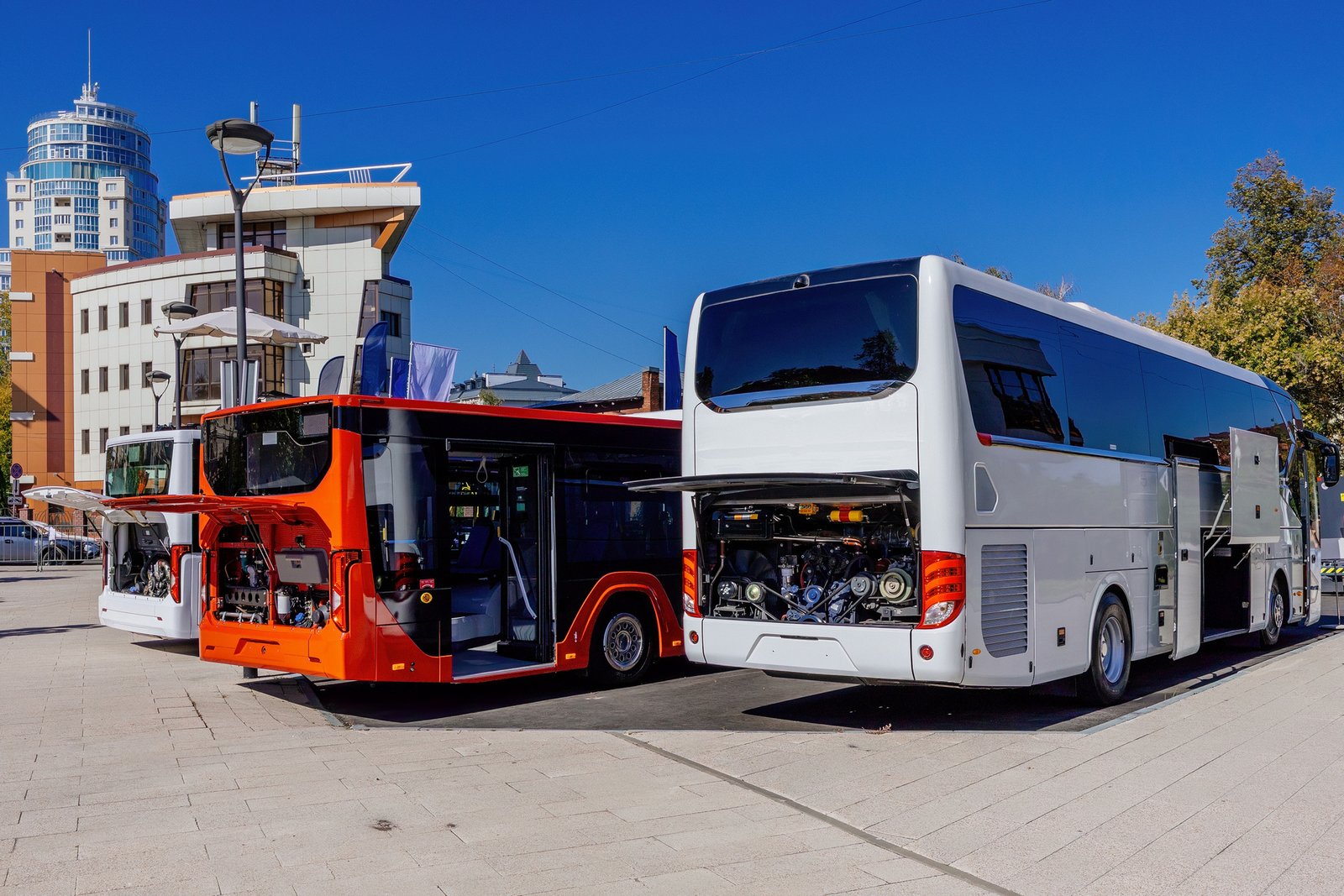
It is the question organisers think about at two in the morning and rarely ask out loud. Forty people, a wedding at four o'clock, and a vehicle that has stopped on the shoulder of Highway 400. What actually happens?
Mechanical failures on well-maintained charter vehicles are uncommon, but they are not impossible, and a good operator has a plan long before it is needed. Here is what that plan looks like and what you should confirm before booking.
Prevention Comes First
The majority of contingency planning happens before the vehicle leaves the depot. Commercial vehicles in Ontario operate under mandatory inspection and maintenance requirements, and every trip begins with a documented pre-trip inspection covering brakes, tires, lights, fluids and safety equipment.
Fleet age matters here. Newer vehicles fail less often, and an operator who invests in maintenance has fewer roadside incidents to manage. It is a reasonable question to ask at the quote stage.
What Happens in the First Ten Minutes
If a vehicle develops a problem in service, the immediate sequence is consistent. The driver moves to the safest available location, secures the vehicle, and assesses whether passengers are safer remaining onboard or disembarking to a protected area away from traffic.
On a highway shoulder, staying seated is usually safer than standing at the roadside. The driver makes that call based on the specific location, and passengers should follow it without debate.
Dispatch is notified immediately, and from that moment two things run in parallel — resolving the mechanical issue and arranging a replacement vehicle.
The Replacement Vehicle Question
This is the part that actually determines the outcome for your group, and it is the question worth asking every operator you consider.
Ask specifically: what is your process if the assigned vehicle fails on our trip? A serious operator will describe spare fleet capacity, relationships with other operators for mutual assistance, and realistic timelines for a replacement reaching a given area.
Timelines vary honestly by geography. A replacement reaching a group within the GTA is a different proposition from reaching a group near Sudbury. Any operator claiming a uniform response time everywhere is overpromising.
Realistic Expectations About Delay
Even with a good plan, a mechanical failure means delay. A replacement vehicle has to be sourced, prepared, driven to your location and loaded, and passengers and luggage transferred.
Within the GTA that is often manageable within a couple of hours. In rural Ontario it can be considerably longer. This is not a failing of the operator; it is geography.
What Organisers Should Prepare
A few small preparations make a bad situation much more manageable:
- Carry the operator's emergency contact number, not just the office line
- Know the venue or event contact so you can communicate a delay early
- Have a nominated deputy so one person is not managing everything alone
- Keep a printed passenger list independent of any phone
- For time-critical events, build genuine schedule margin rather than minimal margin
That last point is the most useful of all. A group that departs ninety minutes early absorbs most realistic delays without consequence.
Time-Critical Trips Deserve Extra Thought
Some journeys have no flexibility — a wedding ceremony, a flight departure, a scheduled cruise boarding, an exam or competition start time.
For these, discuss contingency explicitly at booking rather than assuming. Options include earlier departure times, splitting a large group across two vehicles so one failure does not strand everyone, and confirming what backup arrangements exist for that specific date and route.
Weather Is the More Common Disruption
Worth stating plainly: in Ontario, groups are far more likely to be delayed by winter road conditions or highway closures than by mechanical failure.
The same preparations serve both scenarios. Margin in the schedule, a communication plan and a nominated decision-maker cover the great majority of disruptions regardless of cause.
What Reasonable Operators Do Afterwards
Where a mechanical failure genuinely disrupts a trip, reputable operators address it commercially — an adjustment, a credit or a refund proportionate to the impact.
Ask at booking how service failures are handled, and prefer an operator who answers directly rather than one who treats the question as unwelcome.
Communicating With Your Group During a Delay
How a delay is handled affects the group's experience more than the delay itself. Passengers tolerate waiting; they tolerate being uninformed far less well.
Tell the group what has happened, what is being done, and when you expect to know more — then update at the interval you promised even if there is nothing new. Avoid guessing at a resolution time you cannot support, because a missed estimate does more damage than an honest uncertainty. One person speaking for the group also prevents forty separate versions of the situation circulating.
Ask the Question Before You Book
The willingness to discuss contingency openly is one of the clearest signals of a well-run operation. Companies that have thought about failure are usually the ones that experience it least.
Neios Transport maintains its fleet to commercial standards and will discuss contingency arrangements for your specific trip. Call (416) 884-1141 or visit neiostransport.ca.
Keep planning
-
 School trips
Keeping Children Happy on a Long Bus Journey — A Guide for Schools, Camps and Families
Practical advice for keeping children comfortable on long bus journeys. Seating, rest stops, activities, motion…
Read guide -
 School trips
Coach, Minibus, Sprinter Van or Limo — Choosing the Right Vehicle Class for Your Event
How to choose between a Sprinter van, minibus, motorcoach, school bus or limo for your event. Vehicle classes compared…
Read guide -
 Planning tips
Splitting the Cost — How to Budget and Collect Money for a Group Bus Trip
How to budget, price and collect money for a group bus trip. Building the full cost, conservative headcounts…
Read guide