Luggage, Gear and Cargo Space on a Charter Bus — How Much Can You Actually Bring?
Passenger capacity gets all the attention when groups book a bus. Cargo capacity gets none, right up until forty people arrive at the curb with hockey bags, a folding table, three coolers and a cello.
Luggage space is the most commonly underestimated part of group travel planning in Ontario. Here is a practical look at what fits where, which vehicles carry what, and how to plan a trip where nothing gets left behind on the sidewalk.
The Three Places Cargo Can Go
Every charter vehicle has some combination of three storage areas, and knowing which ones your vehicle has changes the whole plan.
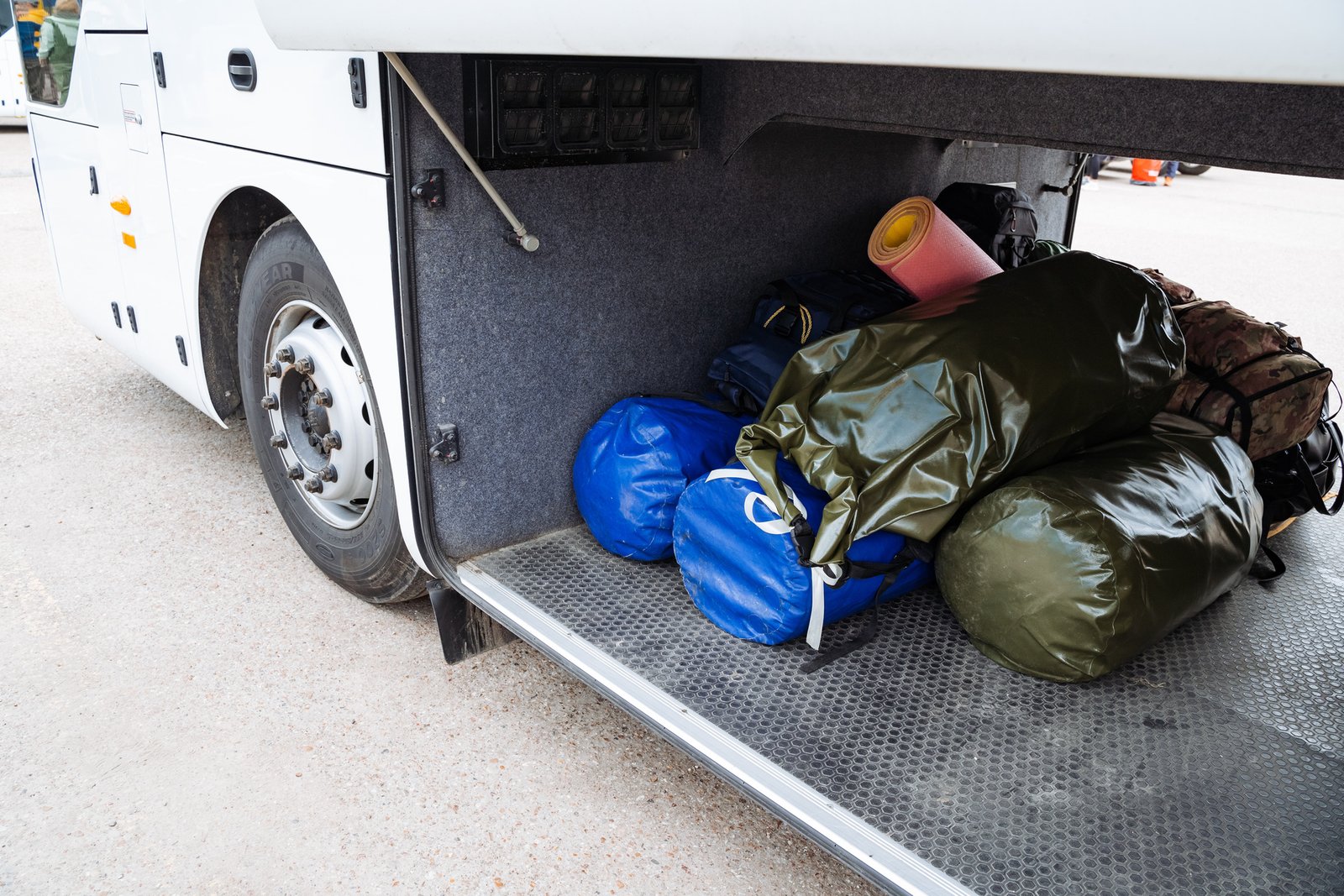
- Undercarriage bays — the large compartments beneath a full-size coach, by far the biggest capacity available
- Overhead racks — interior shelving suitable for coats, backpacks and small bags only
- Rear or interior cargo area — found on Sprinter vans and some mid-size buses, often at the cost of a row of seats
A full-size motorcoach is the only vehicle in the standard charter fleet with genuinely generous cargo capacity. Everything smaller involves trade-offs.
Realistic Numbers by Vehicle Type
A full-size coach carrying around 50 passengers can typically take one full-size suitcase plus a carry-on per person in the undercarriage bays. That is the design assumption for long-distance travel, and it holds up in practice.
A mid-size bus in the 25 to 35 passenger range is a different story. Many of these vehicles have limited or no undercarriage storage, which means luggage travels inside. For an airport transfer with a full passenger load, that becomes the binding constraint long before seat count does.
A Sprinter van seating 12 to 15 will usually accommodate the passengers or a full luggage load comfortably, but not always both at maximum. A group of fourteen with fourteen suitcases heading to Pearson generally needs the seating configuration adjusted or a second vehicle.
Sports Teams Have the Hardest Problem
Hockey is the worst case in Ontario, and it is not close. A full hockey bag plus sticks per player, multiplied by twenty players, is a volume problem that surprises new team managers every single season.
Other equipment-heavy groups run into the same issue in different shapes — rowing teams with oars, marching bands with percussion, dance groups with costume racks, and school science teams with display boards. In each case the honest answer is that the cargo requirement, not the headcount, determines the vehicle.
Tell your operator about the gear at the quote stage. A team of eighteen sounds like a mid-size bus and is very often a full coach.
Awkward Items Worth Flagging
Some items need a specific conversation rather than a general estimate:
- Musical instruments, particularly anything larger than a guitar
- Skis, snowboards and poles
- Golf bags, which stack poorly and take more room than people expect
- Wheelchairs, walkers and mobility devices
- Coolers, catering trays and event supplies
- Trade show displays, banner stands and product samples
None of these is a problem when it is known in advance. All of them are a problem when they appear unannounced at 6:00 a.m.
Loading Time Is Part of Your Schedule
Loading undercarriage bays for a fifty-person group with full luggage takes real time — commonly fifteen to twenty-five minutes, and longer if bags arrive in a trickle rather than all at once. Unloading at the destination takes similar time.
Groups that build zero minutes for this into the itinerary are the groups that leave late. If you have a fixed arrival deadline, work backwards and add a loading window explicitly.
Practical Rules That Reduce Problems
A few habits make heavy-luggage trips run noticeably better. Ask passengers to bring one large bag rather than two medium ones, since bays pack far more efficiently with uniform sizes. Have people label bags clearly, because forty identical black suitcases at a hotel curb is a genuinely slow situation. Keep medications, documents and valuables in a carry-on that stays with the passenger, never in the bay.
For teams, load equipment first as a block and personal bags second. It packs better and unloads faster at the arena.
When to Add a Second Vehicle or a Trailer
Occasionally the right answer is not a bigger bus. If a group has moderate passenger numbers and extreme cargo — an equipment-heavy production, a large catering operation, a festival vendor group — a support vehicle or trailer arrangement is more efficient than upgrading the coach.
This is worth raising directly rather than assuming it is unavailable. Operators plan these arrangements regularly.
Get the Cargo Question Answered First
The simplest advice is this: when you request a quote, state your headcount and your luggage load in the same sentence. It takes five extra words and prevents the single most common day-of problem in group travel.
Neios Transport helps groups across Toronto and Ontario match vehicle type to both passenger count and cargo requirements, including sports teams, music groups and equipment-heavy travel. Call (416) 884-1141 or visit neiostransport.ca for a quote that accounts for everything you are bringing.